CNC milling is a modern manufacturing process that uses a computer-controlled cutting tool (milling cutter) to remove material, thereby precisely manufacturing parts.
You can think of it as an "intelligent, super-precise 3D engraving machine," but it primarily processes hard materials such as metals and plastics.
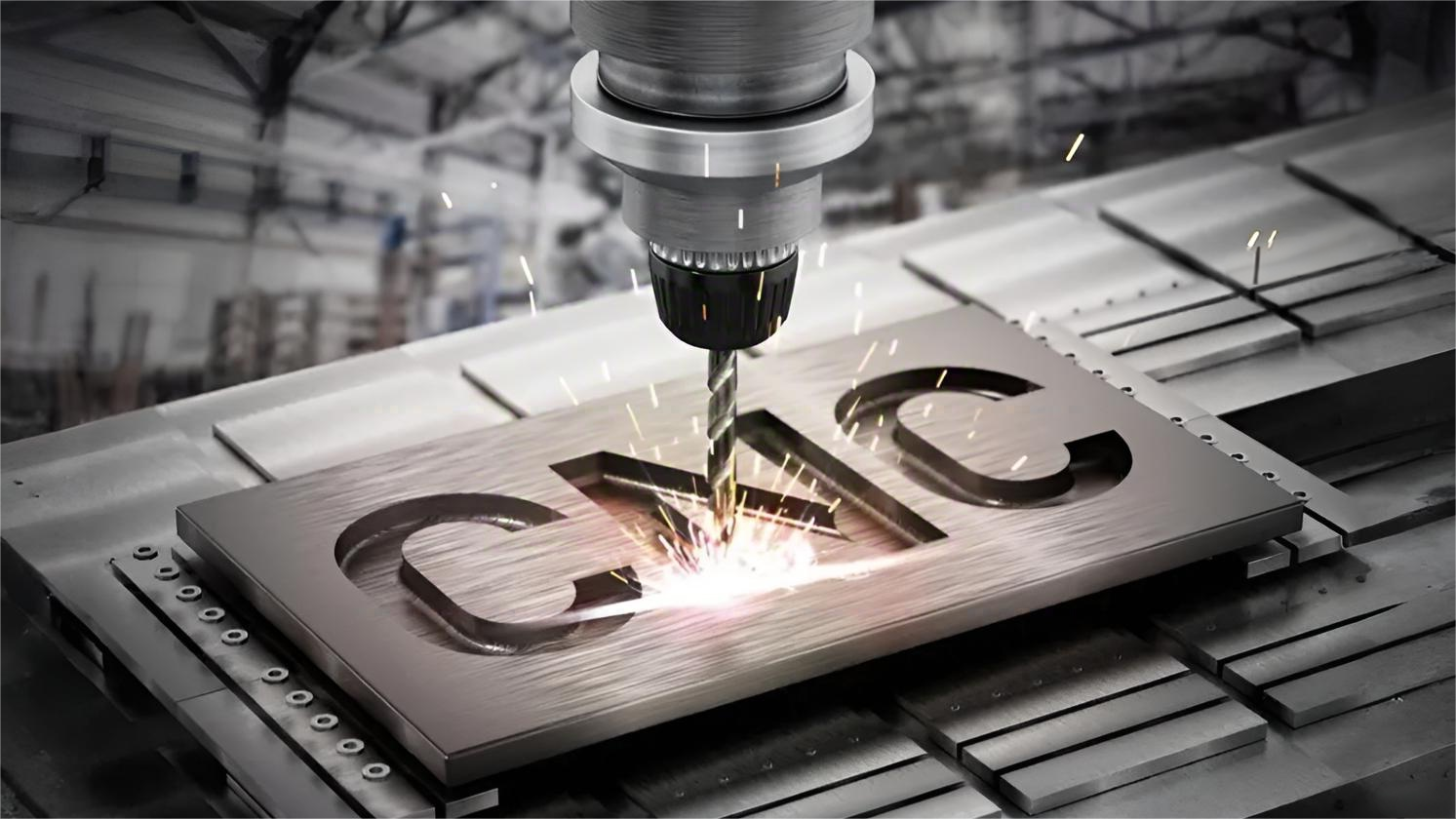
To understand this more deeply, we'll break it down into several key components:
1. CNC (Computer Numerical Control)
This is the "brain" of the milling process.
*Traditional Milling Machines*: These require a skilled worker to manually crank the handwheel to control the position of the tool and workpiece, heavily relying on the operator's experience and skill.
*CNC Milling Machines*: The operator first uses Computer-Aided Manufacturing (CAM) software to write a machining program (G-code). This program contains all instructions, including the tool path, spindle speed, feed rate, etc. The program is then input into the CNC system, and the machine tool will **automatically and precisely** execute all operations, achieving a high degree of automation.
2. Milling (Rotary Cutting)
*Tools*: Multi-edged rotary tools are called **milling cutters**. Milling cutters come in various shapes (e.g., flat-end cutters, ball-end cutters, chamfering cutters, etc.) to suit different machining needs.
*Motion*: The spindle drives the milling cutter to rotate at high speed, while the workpiece is fixed on a movable worktable. Through the relative movement of the tool and workpiece in the X, Y, and Z directions (and even more directions), various complex shapes and features can be cut.
LiveChatX
 Send Email
 WhatsApp